
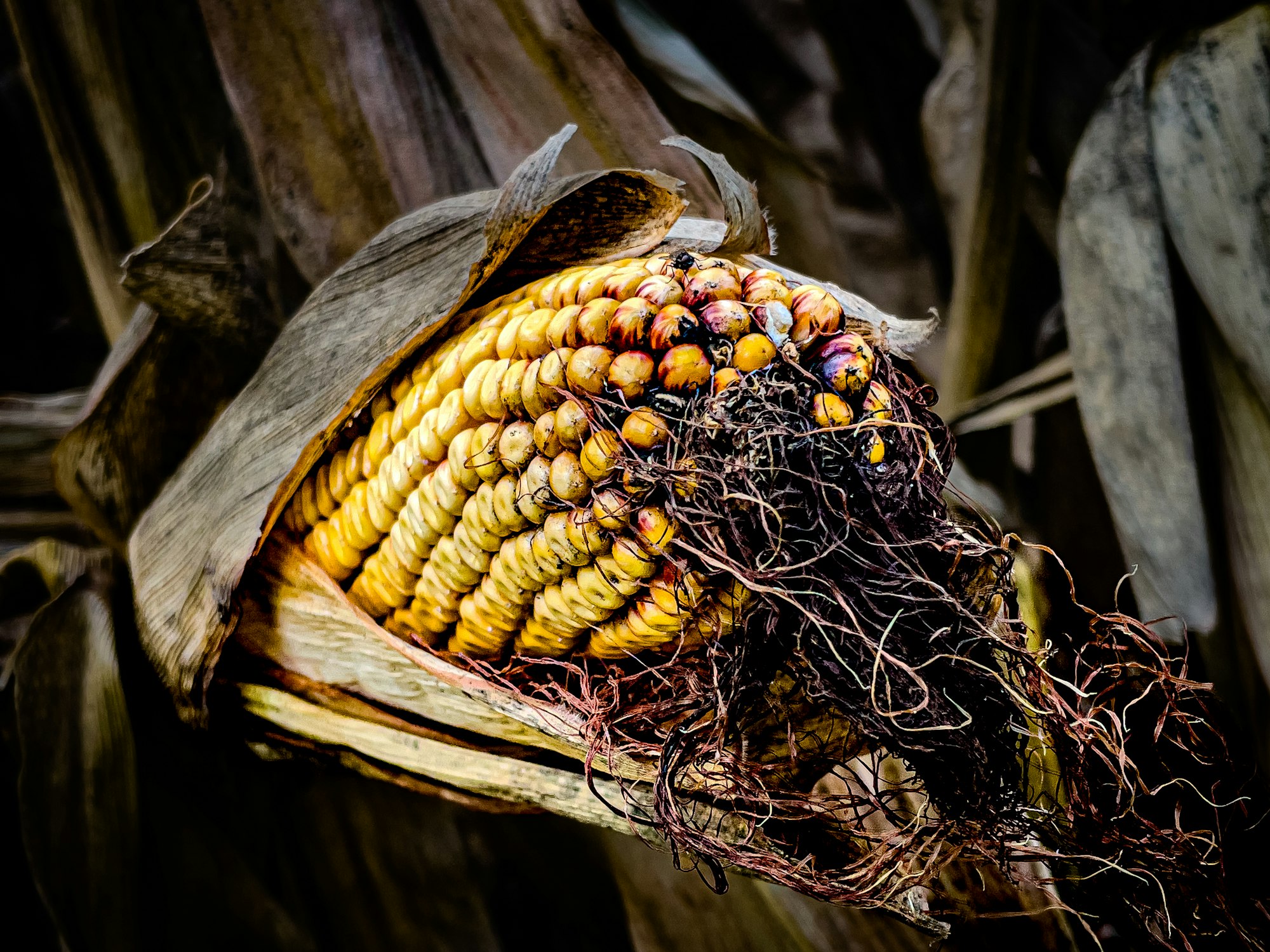
The final 2025 crop report from the US Department of Agriculture, released on 12 January 2026, confirmed what traders had feared and feed buyers had hoped for: the largest corn crop in US history.
The numbers
- Production: a record 17.021 billion bushels (around 432 million tonnes), up 14% on 2024.
- Yield: a record 186.5 bushels per acre, 7.2 bushels above the previous year.
- Area harvested: 91.3 million acres, the highest since 1933, and 4.5 million acres more than estimated in the middle of the season.
- Ending stocks 2025/26: raised to 2.227 billion bushels, a seven-year high.
Corn futures fell to their lowest level since August on the day of the report.
Why it matters for importers
The United States is the world's largest corn exporter. A crop of this size means abundant export supply through 2026, competitive FOB offers from the US Gulf and Pacific Northwest, and pressure on other origins to price aggressively. Combined with good harvests in South America, the world feed grain balance is the most comfortable it has been in several years.
For livestock and poultry producers in Asia and the Middle East, this is a favourable environment. Feed costs are lower and buyers have room to extend coverage. Corn is also gaining share against feed wheat and barley in rations, as the price spread favours it.
What could change the picture
- Planting decisions for 2026. Low prices and high input costs could push US farmers toward soybeans this spring, reducing corn area.
- Weather. Climate forecasters are watching the Pacific closely; a shift to El Niño later in 2026 could affect crops in Asia and Australia.
- Demand. Strong ethanol use and record export sales are absorbing part of the surplus.
Our view
We see a buyer's market for corn in the first half of 2026. This is a good moment for importers to build forward coverage at attractive levels. DBI Resources offers corn from the Americas and other origins, with flexible shipment periods and sizes.
Sources: USDA NASS, Crop Production 2025 Summary, 12 January 2026; USDA WASDE, January 2026.

